
Tag: structural engineering

  • Why You Need a Team of Engineers to Build a Safe Structure

    Why You Need a Team of Engineers to Build a Safe Structure

    Imagine a crowded stadium when a favorite team scores. Tens of thousands of fans leap to their feet simultaneously. They jump, stomp, and lean over safety railings. To the naked eye, the concrete bowl appears completely static. Yet beneath the surface, a silent relay race has just begun.

    Think of a large building/structure as a relay race.

    One person cannot run the entire race while also doing the jobs of everyone else. One structural element cannot also carry all the loads. The baton has to pass successfully from one specialist to another: from one element to the other. If one runner drops it—or if the handover between two runners is poorly coordinated—the entire team can lose.

    A safe structure is not normally the product of one engineer working alone. It is the result of many specialists contributing their knowledge at different stages—from understanding the land and designing the structure to selecting materials, managing construction, inspecting workmanship, and finally handing over the completed project.

    The Invisible Journey of a Load

    Every footstep, every gust of wind against the glass facade, and every ton of steel framing generates an invisible force: weight. To survive, a structure must pass gravity from point to point, element to element, until the load safely reaches the ground.

    A person standing on the fifth floor of a building may think their weight is simply “on the floor.” In reality, that weight begins a journey.

    The floor transfers the load to beams. The beams transfer it to columns or walls. The columns carry it downward through the building. The foundations spread the forces into the soil. Finally, the ground provides the resistance needed to keep everything stable.

    This is called the load path or load transfer mechanism.

    And this is only one part of the engineering problem.

    The building/structure must also resist wind, earthquakes, temperature changes, water, soil movement, construction loads, and many other forces.

    These load paths are managed by specific engineers. That is why a successful project needs a team of specialized professionals, not simply one person with a civil engineering degree.

    The Engineering Team

    1. The Architect: Turning Needs Into a Building/Structure

    The architect is often the first professional to turn the client’s needs into a practical concept. They determine how the building will be used, how spaces should be arranged, how people will move through it, how it will look, and how it should respond to its surroundings. A hospital, school, apartment, or office each has different functional and spatial requirements.

    But architecture cannot be separated from engineering.

    A large open hall may look attractive, but where will the columns go? A large glass façade may create a beautiful appearance, but can the structure resist wind acting on it? A heavy rooftop installation may be convenient, but can the roof support it?

    2. The Structural Engineer: Making the Building Stand

    Once the architectural concept is established, the structural engineer determines how the building will stand and safely transfer its loads to the ground. Just as a table transfers the weight of objects from its tabletop through its legs to the floor, a building transfers loads from slabs to beams, columns or walls, foundations, and finally into the ground.

    The structural engineer determines the appropriate size, arrangement, materials, and reinforcement of these elements and ensures that the structural system can resist dead loads, live loads, wind, earthquakes, and other forces. Their role is to turn the architect’s spatial concept into a structural system that is stable, strong, and safe throughout its service life.

    But even a perfectly designed structure can fail if it is placed on unsuitable ground.

    That is where another specialist becomes essential.

    3. The Geotechnical Engineer: Understanding the Ground

    A building does not stand on drawings—it ultimately stands on soil and rock, and ground conditions can vary significantly even between nearby sites. The geotechnical engineer investigates the ground through boreholes, test pits, soil sampling, field and laboratory testing, groundwater studies, and assessments of bearing capacity, settlement, and slope stability.

    Based on these investigations, the geotechnical engineer helps determine the most suitable foundation system for the structure. Simple buildings on strong ground may use isolated or strip footings, while larger structures or buildings on weak or compressible soils may require raft foundations or deep foundations such as piles.

    The structural engineer can design an excellent column and beam system, but if the foundation is inappropriate for the ground conditions, the building can still experience serious problems.

    A strong building needs a suitable connection to the ground.

    4. The Surveyor: Establishing Where Everything Actually Goes

    Before construction begins, the land surveyor translates the design from drawings into accurate positions on the actual site. Surveyors establish property boundaries, coordinates, ground levels, elevations, slopes, building positions, access points, and construction control points, providing the reference system that guides construction.

    Even a perfectly designed building can become a problem if it is placed in the wrong location or if its dimensions and levels are transferred incorrectly to the site. The surveyor therefore provides a critical link between the design on paper and the structure being built on the ground.

    5. The MEP Engineers: Engineering Everything Inside the Building

    A building is more than concrete and steel; it also needs systems that make it functional, comfortable, and safe. Mechanical, Electrical, and Plumbing (MEP) engineers design essential services such as electrical power and lighting, heating and cooling, ventilation, water supply, drainage, fire protection, communication systems, pumps, and other building equipment.

    These systems must be carefully coordinated with the structural design. A ventilation duct cannot simply pass through a structural beam, nor can a plumbing pipe be installed by cutting through a column. Therefore, structural and MEP engineers must coordinate their designs before construction begins, ensuring that the building’s services can be installed without compromising its structure.

    6. The Environmental and Other Specialist Engineers: Looking Beyond the Building

    Depending on the project’s size, location, and purpose, additional specialists may also be required. For example, environmental engineers or specialists may assess wastewater, storm water, construction impacts, waste management, pollution, and environmental protection measures, helping ensure that the project is not only technically sound but also environmentally responsible and compliant with applicable requirements.

    A transportation or traffic engineer may be needed for projects involving roads, intersections, parking facilities, or major developments.

    A water-resources engineer may be involved in drainage, flood protection, dams, water supply, or hydrological studies.

    A highway engineer may design roads and pavement systems.

    A coastal or hydraulic engineer may be required for projects exposed to rivers, floods, or coastal conditions.

    The larger and more complicated the project becomes, the more specialized knowledge it may require.

    7. The Construction Team: Turning Drawings Into Reality

    A design is only a plan until it is correctly built on site. This is where the project manager, construction manager, site engineers, supervisors, and contractors become essential. They coordinate construction activities, ensure reinforcement and structural elements are installed correctly, manage materials and equipment, support excavations, and make sure construction follows the intended sequence and design requirements.

    Construction also creates temporary conditions and load paths that may not exist in the completed structure. For example, fresh concrete places significant loads on formwork, shoring, and the floors below while a multi-story building is being constructed. Incorrect removal of formwork, inadequate temporary support, or improper construction sequencing can therefore create serious risks—even when the final structural design itself is completely sound.

    8. Materials Engineers and QA/QC Inspectors: Checking What Was Actually Built

    Engineers design structures based on specific material properties and construction requirements, but the materials and workmanship on site must be verified to ensure they meet those requirements. Materials engineers, laboratory technicians, and QA/QC inspectors check items such as concrete strength and quality, reinforcement size and placement, soil compaction, and the quality of steel, welds, bolts, and protective coatings.

    These checks are essential because a well-designed structure can still fail to perform as intended if it is poorly constructed. For example, incorrectly positioned reinforcement, inadequate concrete strength, or poor concrete consolidation can significantly reduce the capacity of a structural member. Quality control ensures that what is built on site matches what the engineers designed.

    Engineering Is a Chain, Not a Single Job

    It is tempting to think:

    “I know a good civil engineer. He can handle everything.”

    Sometimes this approach is appropriate for a very small and simple project, depending on local regulations and professional scope.

    But as a project becomes larger or more complex, expecting one person to be the architect, structural engineer, geotechnical engineer, surveyor, MEP engineer, construction manager, materials specialist, and quality inspector is unrealistic.

    Each discipline exists because it requires different knowledge, experience, tools, and professional responsibility.

    Think about building a human body. The heart cannot replace the lungs. The lungs cannot replace the brain. The brain cannot replace the kidneys. The body works because different organs perform different functions while working together.

    A building or structure is similar.

    The various disciplines each have different responsibilities—but their work must connect.


    The Real Strength Is in the Coordination

    The most important part of a project is therefore not simply having many engineers.

    It is having the right specialists working together.

    • The structural engineer needs information from the geotechnical engineer.
    • The architect needs to coordinate with the structural engineer.
    • The MEP engineers need to coordinate with both.
    • The surveyor needs to translate the design into accurate positions on the ground.
    • The contractor and site engineers need to understand the design intent.
    • The QA/QC team needs to verify that construction matches the requirements.
    • And everyone needs to communicate when something changes.

    A good engineering team does not work as a collection of isolated professionals. It works as a system.


    A Structure/Building Is More Than Concrete and Steel

    When you walk into a finished building, you may see only walls, floors, windows, doors, and ceilings. Behind those visible elements is an enormous amount of invisible work:

    Site investigation → Survey → Architectural design → Structural design → Geotechnical design → MEP design → Coordination → Construction → Testing → Inspection → Commissioning → Handover

    Every stage contributes to the final result.

    If one important link is missing, the entire project can be affected.

    That is why, when planning a civil engineering project, the question should not simply be:

    “Who is my engineer?”

    A better question is:

    “Do I have the right engineering team for my project?”

  • Exploring Civil Engineering Study Areas: Structural, Geotechnical, Transportation, and More

    Exploring Civil Engineering Study Areas: Structural, Geotechnical, Transportation, and More

    From clean water that we drink everyday; to roads/highway that we travel on; to sweet home house buildings that we dwell, all have the finger prints of civil engineering. Civil engineering as a backbone of civilization through out history. It serves the need of people and communities by designing and building houses, buildings, bridges, railways, tunnels, water treatment plants, pipe lines, and so on.
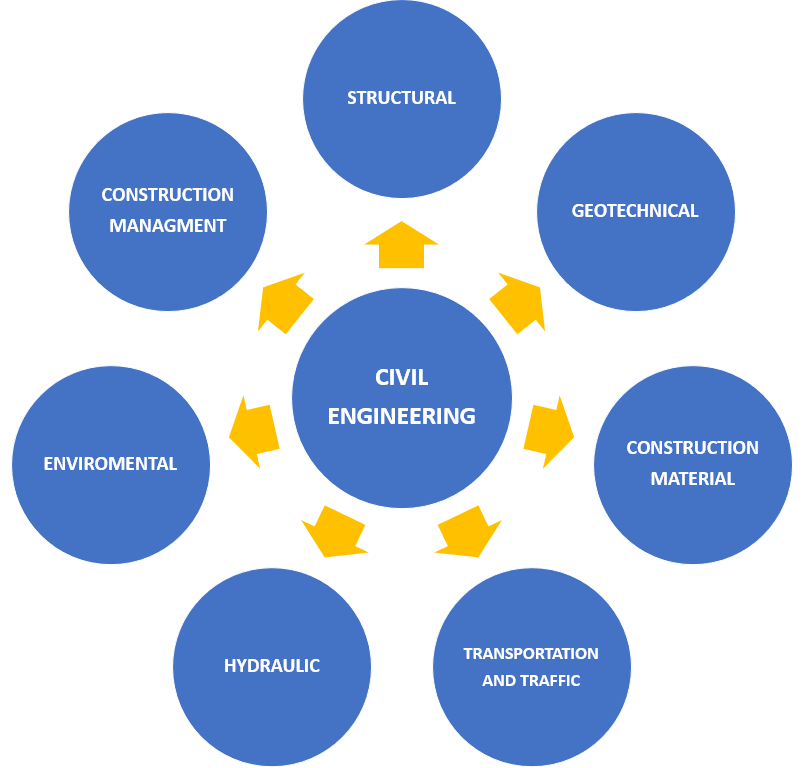
    civil engineering sub-fields

    Civil engineering plans, designs, constructs/builds, monitors, and maintains various structures to benefit society. Civil engineering also studies our surroundings to create safe environment by managing waste and pollution.

    READ HELPFUL BOOKS ON THIS TOPIC
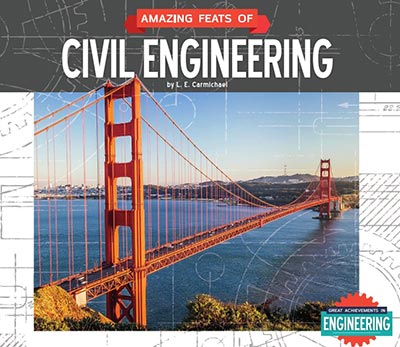
    Amazing Feats of Civil Engineering
    By L. E. Carmichael

    The book highlights the history and role of civil engineers, showcasing iconic projects like bridges, tunnels, and skyscrapers, while inspiring readers with real-world examples and career insights.

    More Books

    An Overview of the Field of Civil Engineering
    By Sheng-Taur Mau

    The book introduces the profession, explaining its history, main branches, and the vital role engineers play in designing and maintaining infrastructure.

    Civil Engineering: A Very Short Introduction
    By David Muir Wood

    The book offers a concise look at the field, covering its history, key figures, and essential works like bridges, tunnels, and water systems, while addressing modern challenges of materials, energy, and sustainability.

    Engineering in Plain Sight — An Illustrated Field Guide to the Constructed Environment
    By Grady Hillhouse

    The book shows how infrastructure around us works, from power lines and bridges to water systems and tunnels. It uses clear writing, color illustrations, and bite-sized explanations to help non-engineers “see” the built environment with new eyes, spotting everyday engineering details that usually go unnoticed
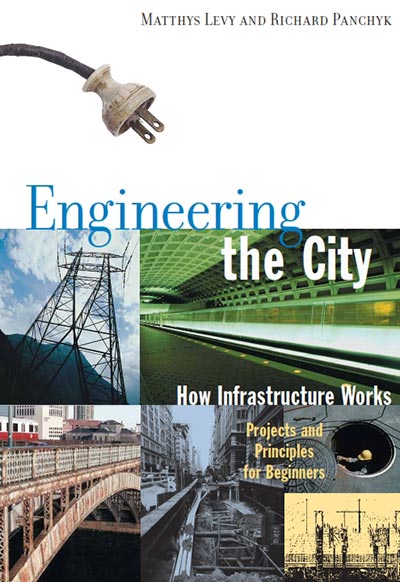
    Engineering the City: How Infrastructure Works (Projects and Principles for Beginners)
    By Matthys Levy & Richard Panchyk

    The book explains how the hidden systems of a city—such as water, electricity, gas, sewers, bridges, roads, and wires—are built and function. It traces how these infrastructures evolved with urban growth, uses diagrams, experiments and games to teach principles, and shows both visible and invisible parts of city engineering.

    The Corniche mixed-use development, three landmark towers, London
    The Corniche mixed-use development, three landmark towers, London

    Structural Engineering

    Structural engineering deals with the forces acting on structures and how these forces are safely transferred to the ground.

    More explanation on structural engineering

    Structural engineering studies forces applied on a structure; how to carry them and properly transfer them to the ground. The forces could come from people, animals, vehicles, wind, earthquake, water, etc.

    In case of buildings, structural engineer receives designs from architectural engineer. Then, he/she analyze and design different parts (beams, columns, shear walls, etc) of the building to carry loads and stand on the ground. Furthermore, structural engineers are also intensively involved in similar tasks on bridges, towers, and other civil engineering structures too. Depending on the type of structure, we name structural engineers as building structural engineer, bridge structural engineers, and so on.

    Geotechnical Engineering

    This field studies the strength and behavior of soil and rock to ensure the ground can safely support structures like buildings, bridges, and dams.

    Bridge pier supported the ground
    Piers of a cable-stayed bridge in Mumbai, India
    More explanation on geotechnical engineering

    Almost all civil engineering structures are placed on natural and/or man-made ground. Geotechnical Engineering studies the load carrying capacity and stability of the ground. This field studies behavior and strength of soil and rocks in the ground.

    Massive structures like sky scrapers, bridges, dams, etc exert a lot of pressure on the ground. This leads to stress and settlement of the ground. If these stress and settlement exceed the allowable limit, the building or bridge can fail or lean. In addition, this field studies landslides and earthquakes.

    Construction Material Engineering

    Construction Materials Engineering focuses on studying materials behavior in the lab and field to set requirements that ensure quality.

    More explanation on construction materials engineering

    Construction materials can be defined as items or things used to build or construct civil engineering structures. There are a lot of construction materials like concrete, stone, timber, steel, asphalt, soil, bricks, hollow blocks, aluminum, glasses, plastics, geosynthetics, etc. These materials need to have certain qualities to carry loads and withstand other environmental factors.

    Construction Materials Engineering studies the behavior of these materials both on field and laboratory. It specifies certain requirements to reach planned quality.

    Transportation and Traffic Engineering

    Transportation and traffic engineering involves planning, designing, building, and managing infrastructure to enable efficient transport which is essential for development and progress.

    A complex highway and railway interchange in Moscow, Russia
    More explanation on transportation and traffic engineering

    Transportation can be generally defined as moving or transporting people, commodities, materials, animals, and so on from one place to another. For this purpose, transportation means like carts, vehicles, buses, trucks, trains, airplanes, etc. are required. These transportation means need roads, bridges, railways, and airfields infrastructures to travel and land on.

    Transportation and traffic engineering is planning, designing, building/constructing, managing and maintaining of these infrastructures. Any nation with high development goals should aspire to proper and efficient systems of transport and traffic management.
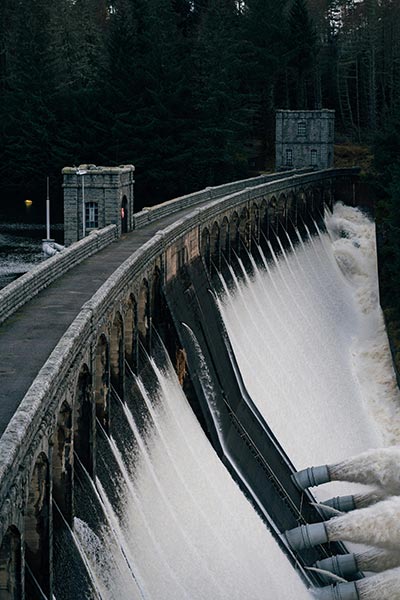
    A mass concrete gravity dam, Laggan Dam, Scottish Highlands

    Hydraulic Engineering

    Hydraulic engineering focuses on studying how water moves and behaves, and it designs systems like dams, canals, and bridges to control, store, and deliver water safely where it is needed.

    More explanation on hydraulic engineering

    All living things require water for survival. However, water is not found everywhere. This means that there is a need to transport water from one place. Hydraulic engineering studies water movement and retention in a given environment.

    Hydraulic Engineering analyzes the force and effect of water movement as a fluid. Hydraulic Engineering develops models for dams, bridges, irrigation canals, bridges, etc so that water can be stored and safely transported to its intended location.

    Environmental Engineering

    Environmental engineering deals with protecting the environment and public health through proper design, construction, and management of systems that handle water, air, and waste. Civil engineers in this field work on projects such as clean water supply, wastewater treatment plants, solid waste management, drainage systems, pollution control, and sustainable construction practices.

    More explanation on environmental engineering

    This civil engineering field is drawn from environmental science in which human beings use environment’s resources. Environmental engineering studies, plans, designs, construct plants for the following purposes:

    • Provide clean water to people
    • Waste water treatment
    • Pollution control
    • Garbage collection and disposal

    In general, environmental engineering build treatment plants and prepare disposal areas so that we get clean drinking water and safe environment to live in.

    Construction Management

    Construction management ensures that a project is completed on time, within budget, and according to quality and safety standards. It involves the process of planning, coordinating, and controlling a construction project from start to finish.
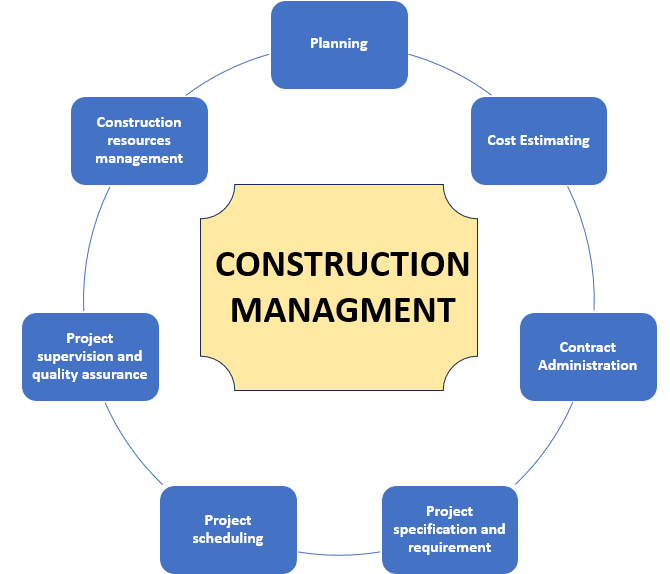
    More explanation on construction management

    Most civil engineering fields discussed above are inter-related and involve planning, analyzing, designing and modeling of particular structures. To actually build or construct these structures, construction management is required. Construction management plans, estimates, bids, construct, and maintain all civil engineering structures.

    Construction management starts by studying the needs and requirement of a certain project.

    Summary

    Civil engineering is an integral part of our life in which it builds and/or construct unique structures which enables our daily life safe and easy. Civil engineering provides:

    • Safe and comfortable houses, buildings, offices
    • Fast and smooth roads, bridges, railways, airfields
    • Water for drinking, washing, swimming
    • Waste water treatment for healthy environment
    • Pollution control and waste management
    • Mitigation measures from natural disasters

    To safe guard the above way of life, it is vital to properly study and apply civil engineering. Civil engineering professionals in each specific field shall be employed to undertake projects.  In our next post, we will uncover the disasters that happened in connection to civil engineering.

    Share your ideas with our community via the comment box below.

    OR